Our Essential Guide to a Durable & High-Performance Padel Court Base
Introduction
What is a Padel Court Foundation?
An excellent padel court foundation does what it says on the tin, providing the perfect basis for the best games of padel. Durable, well-built padel court foundations bring a host of benefits, including enhanced performance and gameplay, longevity, stability and optimal drainage.
In other words, cutting corners (other than the corners of the court) isn’t an option. Our experience in delivering large-scale construction projects means we can consult and advise clients on the best foundations
Why is a Quality Foundation Essential?
Without tip-top padel tennis court construction, padel courts fall into disrepair, and a variety of safety issues can pop up, such as:
- Cracks
- Waterlogging
- Surface instability
As any player with experience will tell you, poor padel tennis court construction also impacts game quality. Consistent foundations are a must. On top of these issues, the durability and longevity of your padel court investment may not live up to expectations without the very best foundations in place.
In short, bad-quality court foundations are dangerous, expensive and not conducive to high-quality play.
Different Types of Padel Court Foundations
So — what types of padel foundations are available?
Concrete Slab
The original court of choice. Concrete is the traditional choice for padel court players and is suitable for players of any experience level. It’s durable and reliable, but additional drainage solutions may be required over the long term.
Porous Concrete Base
All the benefits of concrete, without the drainage issues. A porous concrete base is much more suitable for water drainage and prevents pooling, all while meeting those high sustainability goals.
Compacted Gravel Base
Looking for a more affordable option? The compacted gravel base is the way to go. While a compacted gravel base has plenty of benefits, such as frost protection and a solid, stable surface, it requires proper drainage layers and regular maintenance.
Sustainability & Environmental Benefits of Permeable Foundations
Everyone has to do their bit to improve sustainability. Even padel courts.
That’s why we’re proud of the sustainability and environmental benefits integral to permeable padel court foundations. Reduced surface runoff, compliance with Sustainable Drainage Systems (SuDS) and a lower environmental impact than other courts are just some of the reasons why permeable foundations are the right choice for padel court investors.
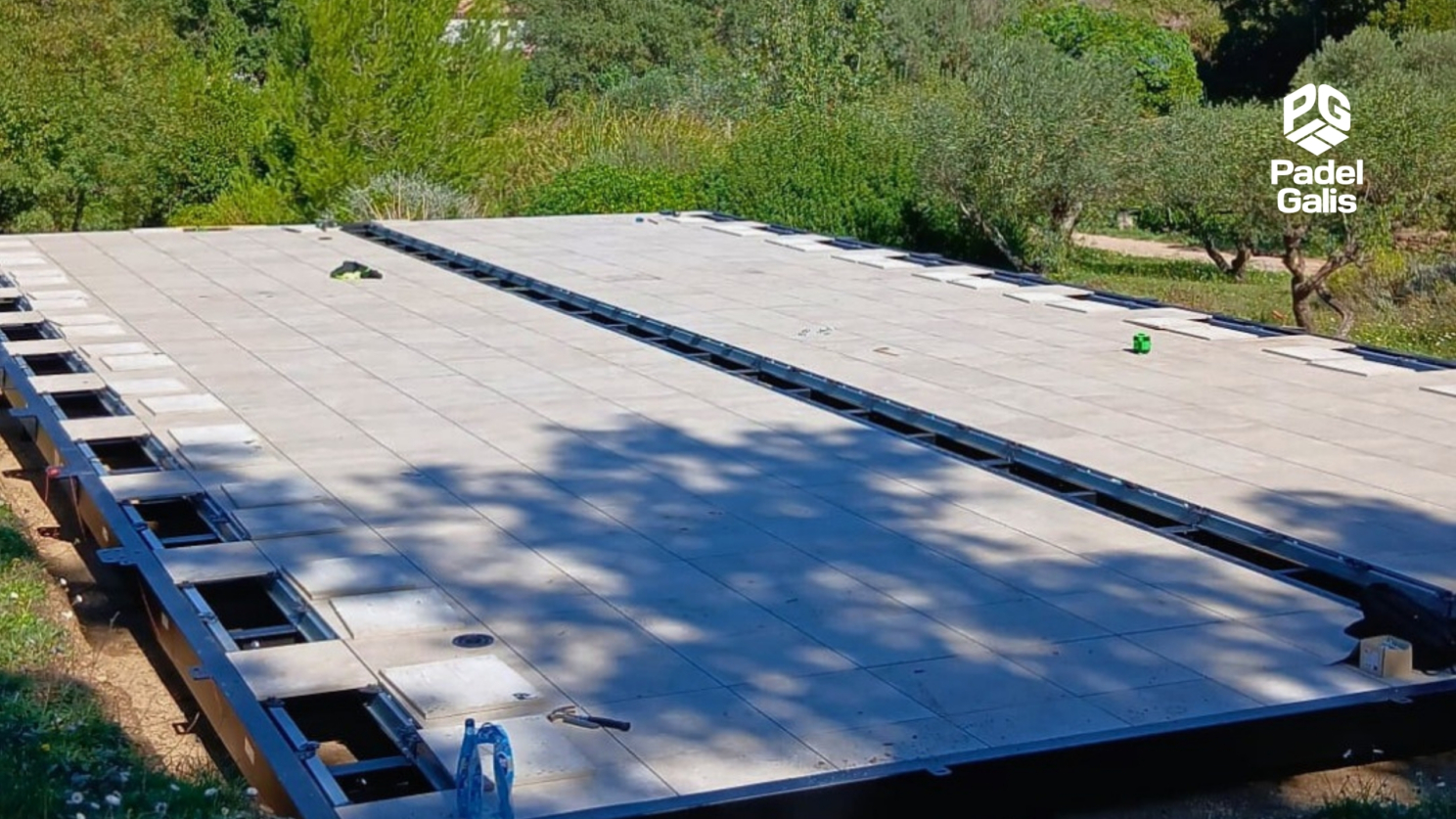
Our innovative FlexiPadel court is the perfect sustainable choice, built using premium eco-friendly materials and with zero damage to existing surfaces. Damage-free installation, adaptable design and a professional feel are a few of the many perks of our groundbreaking solution. Good for the environment, good for the game.
Padel Court Foundation Construction Process
Let’s lay out the groundwork. Here’s how, step-by-step, the padel court construction process works.
Planning and clearing the site.
First things first, we confirm our plans for the court and survey the site to ensure it’s clear of debris. We also determine precise dimensions and assess drainage patterns at this stage.
Create a level surface.
With planning approved and any obstacles out of the way, we create a perfectly flat surface based on our dimensions.
Install a drainage system.
A system is then installed around the court (and sometimes under the surface) to ensure efficient drainage. This is a vital part of the process.
Add the court surface.
This is where things start to weave together. With everything in place, we pour on the desired surface using carefully selected, premium materials.
Voila. The foundations are set for a world-class padel court. The floor (literally) is yours.
Why Choose Padel Galis UK for Padel Court Foundations?
Anyone could say they’re the best choice for laying padel court foundations. We’ve got the case studies to prove it.
Our industry-leading construction practices are known for our use of premium materials and decades-long reliability. Thanks to the hard work and passionate dedication of over 100 employees worldwide, we’ve sold 10,000 padel courts globally in just six years. In the UK, we’ve constructed courts in every corner of the country, from Birmingham to Basildon.
When choosing Padel Galis UK, you’re not just laying the foundations for a padel court; you’re laying the foundations for a decades-long passion for the fastest-growing sport in the UK.
FAQs
What is the best material for a padel court foundation?
Porous concrete is the best material for a padel court foundation because of its drainage properties, strength, stability and durability. Combined, these benefits create the ideal foundations for players of all experience levels. While standard concrete and gravel bases have their benefits, porous concrete is the perfect choice in most instances.
Why is drainage important in padel court foundations?
Poor drainage can be extremely damaging to padel courts for a number of reasons, impacting their long-term reliability. These include water accumulation, surface cracks and unsafe playing conditions. In contrast, porous concrete prevents water-related damage.
What are the recommended thickness and specifications for a padel court base?
The recommended thickness and specifications for a padel court base in the UK are 18 to 20cm (7 to 8 inches), with a sub-base of around 250mm depth and a 65mm layer of porous material. At Padel Galis UK, we have an optimal approach to court foundation design to ensure long-lasting courts.
How long does it take to install a padel court foundation?
Padel court construction generally takes four to six weeks, depending on the speed of preparation, weather conditions, curing time and the type of foundations that have been chosen.
Can existing surfaces be adapted for a padel court foundation?
Yes — adapting existing surfaces (such as tennis or basketball courts) for padel court foundations is possible. However, extra consideration must be given to foundational and structural reinforcement, resurfacing and drainage.