
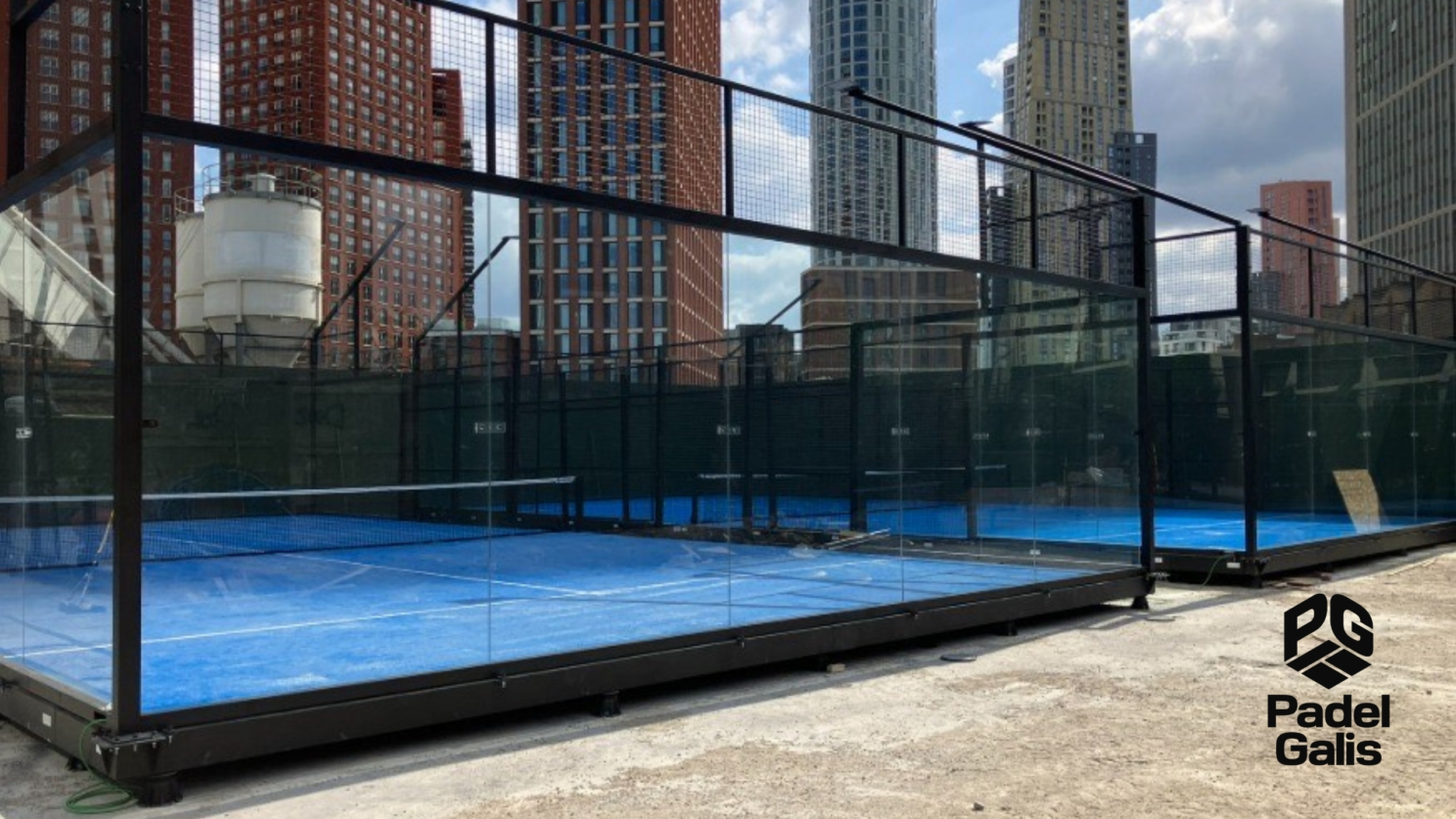
What operators forget to budget for. If you’re building padel courts, you’ll spend weeks debating the build spec, and about five minutes thinking about what it costs to run the thing. That’s how operators end up with a court that’s “busy” but not profitable. Capex is the entry ticket. Opex decides whether the business works.
The 5 running cost buckets
1) Energy. Lighting is the main character.
If you’re running evening play, lighting is a core cost, not a footnote.
What to budget for:
- Hours of lighting use per week (peak and off-peak)
- Energy consumption per fixture
- Tariff assumptions (and a buffer)
- Maintenance/replacement cycle
- Practical tip: model energy cost under three scenarios: base, upside (more evening bookings), downside (higher tariffs).
2) Routine maintenance for your Padel Court
The boring stuff that protects revenue. Maintenance isn’t optional if you want consistent bounce, safe footing and fewer closures.
Budget for:
- Weekly brushing and inspections (labour time)
- Periodic decompaction
- Deep cleans
- Infill top-ups
- Seasonal checks (spring/autumn)
If you don’t budget time and ownership, it won’t happen. Your first padel court: Ten questions before you commit
3) Replacement parts and wear items for your Padel Court
Even well-built courts have wear items.
Common budget lines:
- Net systems and tensioning
- Gate hardware and latches
- Fixings and small hardware
- Turf/infill top-ups (as required)
- Lighting components (drivers, fittings)
The question isn’t “will we need parts?” It’s “how quickly can we fix issues so downtime stays low?”
4) Insurance and compliance for your Padel Court
Insurance varies by operator and site, but it’s a real line item.
Consider:
- Public liability
- Property cover
- Equipment cover
- Any site-specific requirements (landlord, local authority)
- Also factor in compliance checks and documentation, especially if you’re running a busy commercial site.
5) Downtime of your Padel Court
The hidden cost everyone ignores. Downtime is a cost even when you’re not paying anyone.
Every hour a court is closed is:
- Lost booking revenue
- Lost coaching revenue
- Customer frustration (future loss)
- Budget a downtime allowance and treat uptime as an operational KPI.
The simple budgeting model for your pricing
Start with a monthly view.
Step 1:
- Estimate monthly bookable hours
- Bookable hours/week × 4.3
- Multiply by number of courts
Step 2:
- Apply realistic utilisation
- Split peak and off-peak. Don’t average it.
Step 3:
- Calculate revenue per hour target
- Work backwards:
Required revenue/hour =
Monthly opex + Monthly finance + Target profit
————————————————————
Booked hours
If your required revenue/hour is higher than your market will pay, you either:
- Need higher utilisation (programming)
- Need lower opex (design decisions)
- Need a different pricing structure (products)
What operators forget:
- Energy cost buffers
- Labour time for maintenance
- Parts and response time
- Insurance increases as usage grows
- Downtime as a forecast line
Before you finalise your business case, check you’ve:
- Modelled energy cost under 3 scenarios
- Assigned maintenance ownership and time
- Budgeted wear items and parts
- Included insurance and compliance
- Included a downtime allowance
- Checked pricing against required revenue/hour
If you want a court that’s profitable (not just popular), build your pricing and utilisation plan around opex from day one.