
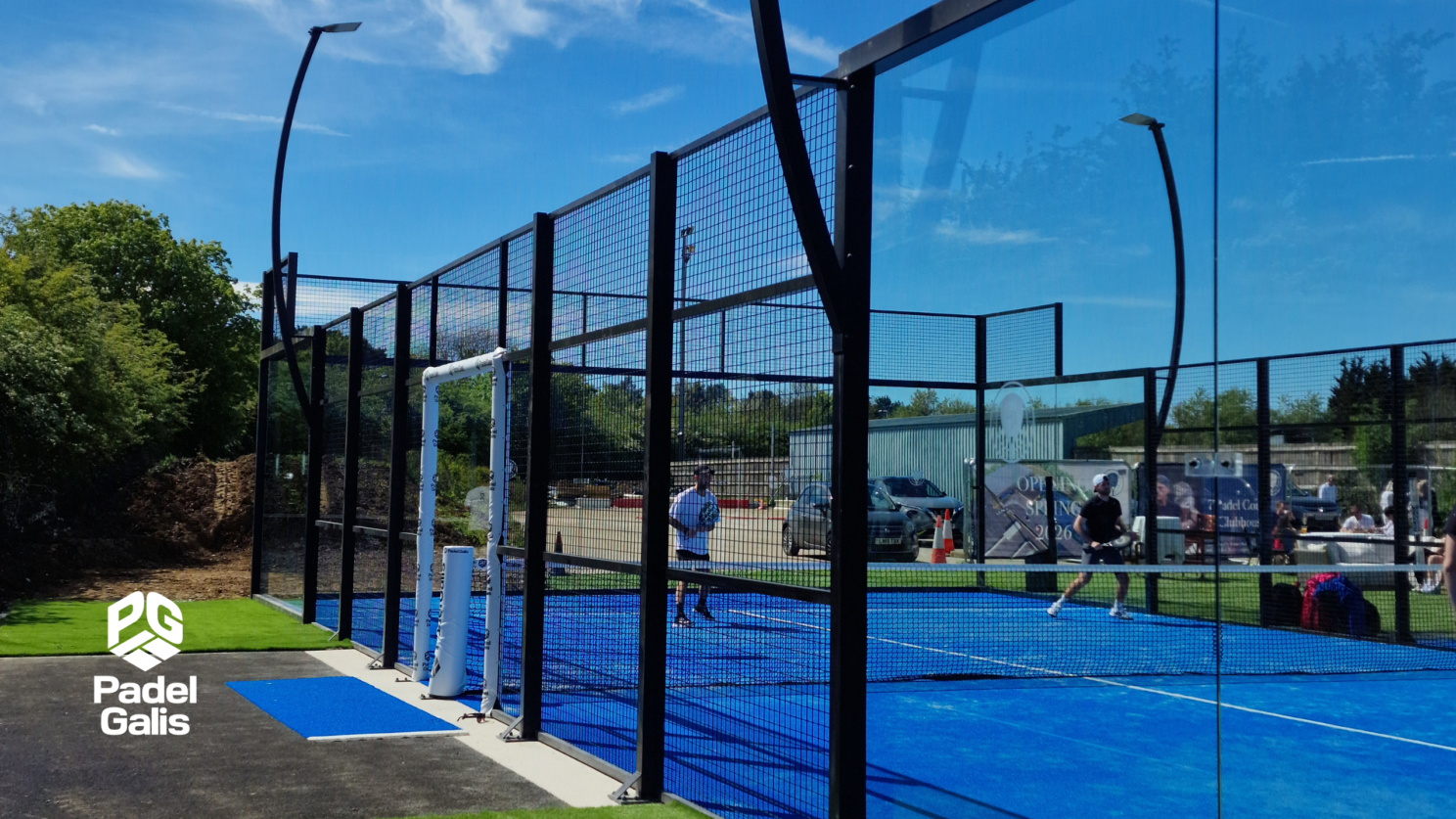
Before you commit to your first padel court, get brutally clear on the basics: who it’s for, where it’s going, how planning will work, what spec you actually need, and how you’ll keep it booked and maintained. These 10-questions will help you avoid expensive, unforeseen moments.
If this is your first padel court project, you don’t need more inspiration, you need clarity. Most expensive mistakes happen because someone skipped one of the “boring” questions:
- Is the site actually viable?
- What’s the planning route?
- What exactly are we buying?
- How will we keep it booked in month six, not just week one?
10 essential questions to consider
So, here’s a simple padel court checklist. Answer these 10 questions before you sign anything. If you can’t answer one yet, that’s not a failure, it’s a signal that you’ve found the next thing to investigate.
1) Who is the court actually for?
Be specific. “Everyone” is not an audience.
Start by writing down your primary and secondary users:
- Beginners and social players
- Existing tennis/health club members
- Pay-and-play locals
- Corporate bookings and team socials
- Juniors and coaching programmes
- League players who care about performance and consistency
Why it matters: your audience influences everything, opening hours, pricing, coaching partnerships, the spec you choose, and even whether indoor vs outdoor makes sense.
A useful prompt: If you had to fill 70% of your bookings with one type of customer, who would it be?
2) What’s the utilisation target (months 4 to 12)?
Launch demand is not your baseline. Friends, curiosity and “new thing in town” energy can make month one look great, then reality hits.
Define these three numbers:
- Peak utilisation target (e.g., weekday evenings + weekends)
- Off-peak utilisation target (midday, mornings, late nights)
- Base case for months 4–12 (what you can realistically sustain)
If you can’t define these, you can’t build a business case, and you can’t choose the right court strategy.
Tip: don’t just think “hours booked”. Think “hours booked at a price that covers costs”.
3) Is the site viable beyond “it fits”?
A court fitting on paper isn’t the same as a court working commercially.
Work through these practical checks:
- Access and parking at peak times (especially evenings/weekends)
- Neighbour proximity (noise and light sensitivity)
- Install access and logistics (can vehicles and equipment actually get in?)
- Customer flow, where do people enter, wait, and move between courts?
If you’re building at a club, consider whether padel create conflict with existing members at peak times?
If you’re building at a venue, consider if padel will compete with (or complement) your core revenue?
4) What are the site risks (wind, drainage, ground)?
Outdoor sites need to be much more durable to withstand changeable weather conditions, especially here in the UK. Setting the court up for success in this area is essential. Its starts with considering the following conditions:
Check:
- Wind exposure (playability and structural loading)
- Drainage (where does water go, and what happens in heavy rain?)
- Ground conditions (what’s the base spec likely to be?)
- Sun/shadow (glare can be a real issue at certain times)
This is why padel court feasibility work and site surveys matter. A proper survey can save you from redesigns, delays, and surprise groundworks costs.
5) What’s the planning route and timeline?
Planning is often the critical path.
Confirm:
- Which route you’re taking (and whether padel court planning permission is required)
- What drawings and supporting documents are needed
- Likely constraints (hours of use, lighting, neighbours, fencing height)
- A realistic timeline with a buffer for questions, revisions and delays
If you’re near residential areas, planning conditions can shape your operating model (for example, restrictions on late-night play or lighting levels). Planning support is vital for a smooth installation.
6) Indoor or outdoor?
This one seems an easier decision to make as its often dictated by the amount of available space you have and if extending indoor facilities is even an option.
A simple way to frame it:
- Outdoor: typically lower capex, faster to launch, but weather variability affects utilisation
- Indoor: typically higher stability and year-round play, but different space requirements, higher build complexity, and often a different planning/landlord conversation
- Choose based on utilisation confidence and your audience.
If your business case relies on weekday daytime bookings, indoor can protect consistency. If your demand is mostly evenings/weekends and you have a strong local scene, outdoor can work brilliantly.
7) What spec do you actually need?
Ensure the spec is measurable against other premium standards.
Consider the following:
- Court model and panoramic style
- Glass spec and safety standards
- Turf / infill spec and what it means for maintenance
- Lighting performance and spill control (especially near neighbours)
This is where first-time buyers often overpay or under-spec.
Your first padel court needs to be right for your users, your site and your operating model. Take a look at our court types to find out more.
8) What’s included in groundworks (and what isn’t)?
Padel court groundworks are where projects drift, in cost, timeline, and responsibility.
Confirm:
- Base build-up and materials
- Drainage design and outlets
- Level tolerances (what “flat” actually means)
- Who is responsible if ground conditions differ from assumptions
- What happens if the site needs additional enabling works
If two quotes differ wildly, this is usually why. One includes the messy bits; the other assumes the messy bits don’t exist.
Take a look at whats involved in the court installation process here.
9) Who owns maintenance and after sales care?
Its a good idea to clarify how ongoing maintenance and after sales care will work as part of your longer term planning.
Consider:
- Weekly routine: brushing, infill checks, quick inspections
- Monthly/seasonal tasks: decompaction, deep clean, drainage checks, lighting checks
- Logging and warranty requirements: what needs recording to protect warranties
- Budget and responsibility: who does it, and what happens when they’re off?
Maintenance protects uptime. Uptime protects revenue. And in year two, the venues that win are usually the ones that kept their court playing well.
10) What’s the finance route, or is leasing an option?
Buying vs leasing is a strategic decision.
Consider:
- Do we need to protect cash for marketing, staffing, or additional courts?
- What’s the downside scenario (winter bookings, downtime, new competition nearby)?
- Does the model still work under downside assumptions?
If you’re exploring flexibility, padel court leasing can be worth considering, especially if you want to launch sooner, preserve cash, or keep options open.
The “ready to commit” checklist
You’re ready to go ahead with your padel court when:
- You’ve defined the audience and utilisation targets
- You’ve completed feasibility and site survey steps
- Planning route and constraints are clear
- Spec and groundworks scope are written down
- Maintenance ownership and budget are agreed
- Finance route is chosen with downside modelled
If you want your first court to be a success in year three (not just month one), answer these questions early and build your project around the real constraints, not the optimistic assumptions.
Ready to start planning your project?
The smoothest padel court builds usually start with a proper survey and a realistic plan.
If you’re exploring a new court project, Padel Galis UK can support you from early feasibility through to planning, installation and maintenance.
Start with a free site survey or get in touch to discuss your project.